
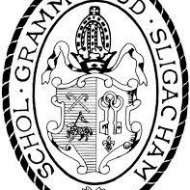
Sligo Grammar School is one of the oldest surviving educational institutions in the west of Ireland. Although the modern school is best known as a co-educational boarding and day secondary school on The Mall in Sligo, its history stretches back more than four centuries through a series of earlier foundations linked to the Church of Ireland. The present campus incorporates parts of the 1752 Charter School, created under Royal Charter, which later merged with the Diocesan School of Elphin. The Elphin school, once attended by Oliver Goldsmith, moved into the Sligo buildings in 1862 and formed the core of what would evolve into the Grammar School.
The school grew significantly in the twentieth century. A major step came in 1907 when new dormitories and classrooms were built to consolidate boarding on the current site. Sligo Grammar later absorbed Sligo High School in 1947, acquiring the neighbouring property known as The Hermitage to house girl boarders. A fire destroyed The Hermitage in 1976, but a new residence replaced it two years later. Throughout the 1970s and early 2000s the campus expanded with additional teaching blocks, specialist rooms and eventually a new library completed in 2012. The school is managed today by a local Protestant board under Church of Ireland patronage.
Rugby has defined a large part of the school’s identity. Sligo Grammar competes in the Connacht Schools system and has won the Senior Cup thirteen times. Their strongest modern period came recently with consecutive titles in 2022, 2023 and 2024, echoing another successful spell during the 1999 and 2000 seasons under coach Oliver Morris. Sport is not limited to rugby. Students also take part in hockey, basketball, athletics and kayaking, and the school maintains active debating teams in English, Irish and German. Music remains prominent through an SATB choir that performs throughout the school year.
The boarding community is a central feature, with around one hundred students living on campus. Enrolment typically sits near 450, giving the school a scale that is small by modern standards but consistent with its traditions and with the character of education in the northwest. The school continues to draw students from across Connacht and further afield.
Among its past pupils are figures who have shaped Irish cultural life, including the artist Jack B. Yeats and former Irish Times editor R. M. Smyllie. The school also retains a connection to earlier forms of its history through Oliver Goldsmith, who attended the Diocesan School that later merged into the present institution. Contemporary alumni include writer and translator Frank Wynne and former Munster scrum-half Cathal Sheridan.