
Sydney Church of England Grammar School, widely known as Shore, is an independent Anglican school on Sydney’s Lower North Shore. It operates across two campuses: the North Sydney campus for Years 3 to 12, and the Northbridge campus for Early Learning to Year 2. The school is co-educational in its earliest years and boys only from Year 3 onward. Boarding is offered from Year 7, with four boarding houses on the North Sydney site.
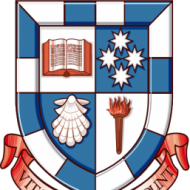
Shore was founded in 1889 under the direction of Bishop Alfred Barry following the closure of St James’ School. The founding headmaster selected the Victorian mansion of Bernhardt Holtermann, known for discovering the Holtermann Nugget, as the school’s home. Holtermann’s sons were among Shore’s first students. The school’s colours and diagonal stripes were adapted from Christ’s College, Cambridge, where the first headmaster had studied. The crest features the Bible, the Southern Cross, a shell symbolising the link to St James’ School, and a torch. The boater, one of the school’s best known uniform elements, was introduced in 1912 and became compulsory in 1924.
The institution carries two formal names: Sydney Church of England Grammar School and Shore School. The abbreviated name Shore was adopted in the early 1990s to avoid confusion with Sydney Grammar School and SCEGGS, and to reflect the school’s location in the North Shore region.
The North Sydney campus includes the War Memorial Chapel, the War Memorial Hall, the Ken and Joan Smith Auditorium, the BH Travers Centre with its library and basketball courts, the Benefactors Building which houses archives and the Bob Gowing Museum, and the Centenary Art Building. Sporting facilities include cricket nets, tennis courts and an oval, with further upgrades completed through the Shore Physical Education Centre project. The Preparatory School, originally built in 1926, was fully renovated in 2006.
The Northbridge campus opened in 2003 as a dedicated Early Learning to Year 2 site with long day care facilities. It also contains the school’s primary sporting grounds, purchased in 1916 and opened in 1919 as a memorial to the 880 Old Boys who served in the First World War. The site includes six full-sized ovals, tennis courts, pavilions and a redeveloped grandstand.
Shore offers a wide academic curriculum and has historically performed strongly in Business Studies, Economics, Mathematics and Latin, with consistent state-level rankings. Students sit the New South Wales Higher School Certificate.
Co-curricular activities include a broad sports programme within the Great Public Schools competition. Rugby, cricket, rowing, tennis, athletics, basketball and football are among the main offerings. The boatshed is located at Gladesville on the Parramatta River, and rowing has formed part of the school’s identity since the late nineteenth century. Performing arts programmes include multiple bands, orchestras, ensembles and major theatrical productions staged in the Shore Performing Arts Centre.
The school has been led by a succession of ten headmasters since 1889. Dr John Collier is due to retire at the end of 2025, with Peter Miller appointed to begin in 2026.
Shore has produced alumni across government, business, academia, law, sport and the arts. Old Boys include former Prime Minister Sir John Gorton, High Court justices, multiple Reserve Bank Governors, Rhodes Scholars, business founders, and sporting figures such as tennis world number one John Newcombe and former Wallabies captain Phil Waugh.
Shore remains a member of the major associations governing independent and boarding schools in Australia and is one of the founding members of the Athletic Association of the Great Public Schools of New South Wales.