
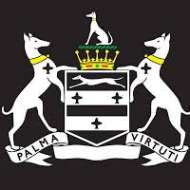
Selborne College is a long-standing English-medium boys’ school situated in the suburb of Selborne in East London, Eastern Cape. Founded on 8 October 1872, it ranks among South Africa’s oldest educational institutions and has maintained a strong academic and sporting identity for more than 150 years. The school’s roots lie in the Panmure Public School, established by Pastor Heinrich Muller, a German settler who led the fledgling institution through its early decades. As East London grew, so did the school, shifting locations multiple times before settling into its current grounds in 1922. The renaming of the school to Selborne College in 1907 reflected both civic pride and its connection to the Second Earl of Selborne, whose influence shaped the politics of the early Union of South Africa.
Selborne’s ethos is anchored in its motto, Palma Virtuti (“Reward is to the Brave”), which underscores the value it places on courage, discipline and achievement across academics, sport and culture. A significant feature of the school’s identity is its commitment to tradition. One of the most enduring is the Ceremony of the Key, inaugurated in 1924 at the unveiling of the school’s war memorial. Passed each Founders’ Day from the matric class to the Grade 11 cohort, the Key symbolises guardianship of the College’s values and the continuity between generations of Selbornians. The Old Selbornian community — formalised in 1909 — plays a central role in preserving these traditions and remains highly active across school initiatives, reunions and sporting events.
Boarding has been part of Selborne since the early twentieth century, and Norton House continues to accommodate boys from across the region. Named after Old Boy and Victoria Cross recipient Gerard “Toys” Norton, the hostel reflects the school’s deep historical ties to public service and military contribution. The broader campus includes academic buildings, memorial spaces and a well-developed sports precinct that supports the school’s wide range of codes.
Sport is a defining pillar of Selborne life. The school maintains intense traditional rivalries with Dale College, Grey High School (Gqeberha) and Queen’s College, fixtures that stretch back more than a century. Rugby, cricket, hockey and rowing hold a central place in school culture — with Selborne notably home to the oldest school rowing club in South Africa. Rugby heritage is strong, with the school producing several Springboks, international players and professional athletes. Cricket remains equally significant, with Mark Boucher among the most prominent Old Selbornians to reach international honours.
Academically, Selborne follows the Eastern Cape curriculum and offers the standard Grade 8–12 progression. As a public school with a diverse intake, academic performance varies year to year, but the school maintains a reputation for producing well-rounded pupils capable of excelling in tertiary studies, business, science, arts and public service. Music, cultural activity and leadership development—including cadets—form part of a balanced school programme.
Old Selbornians have made their mark in multiple fields. The school’s sporting contribution is particularly notable: in rugby, alumni include André Vos, Mark Andrews, Brent Russell, Rory Kockott, Chris Cloete, Gcobani Bobo, and a steady pipeline of provincial and professional players. In cricket, Selborne has produced internationals such as Mark Boucher and Geoff Chubb. In motorsport, Selborne counts Jody Scheckter, the 1979 Formula One World Champion, among its alumni. Other prominent Old Boys include billionaire investor Allan Gray, RAF commander Sir Leonard Slatter, astrophysicist Saul Teukolsky, Olympian Anaso Jobodwana, and multiple national swimmers and squash players.
With its deep traditions, strong alumni network and longstanding commitment to sport and academics, Selborne College remains one of the Eastern Cape’s most recognisable boys’ schools. Its combination of heritage, community links and competitive spirit ensures that it continues to hold a central place in South African schoolboy culture.